A classification error is not a typing mistake. It is an inaccurate declaration that changed the amount owed to the Treasury — and it is treated as such.
That is the whole difference between a badly filled form and a reassessment. The HS code is not one administrative field among others on the customs declaration: it is the field that determines the import duty, the VAT base, eligibility for tariff preferences and the triggering of prior controls. Change it, and you change the amount assessed.
This article describes what actually happens when the error is detected, and how to defend yourself.
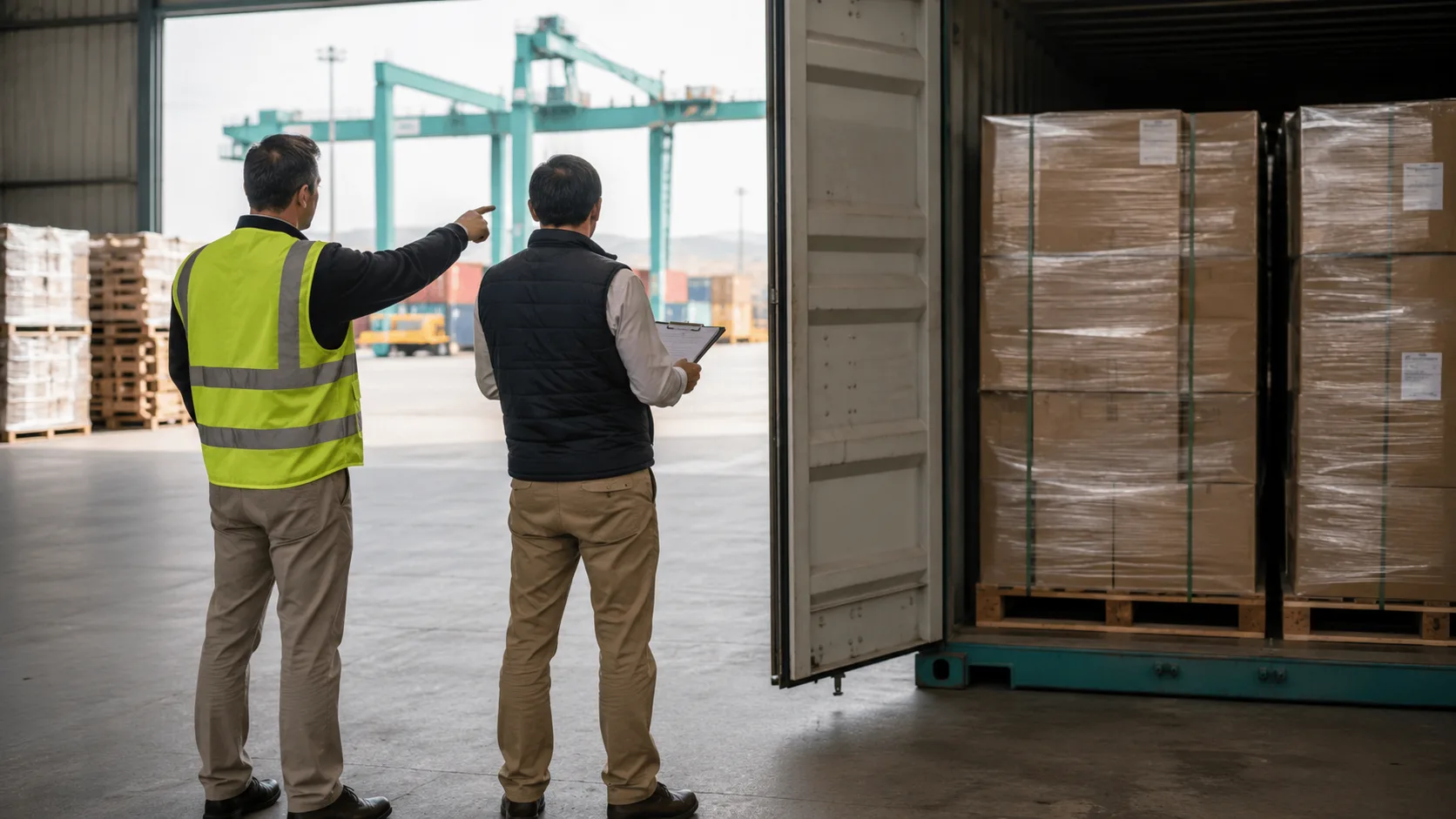
A post-clearance audit looks at the history, not only at today's declaration
1. The four ways of getting it wrong
They do not carry the same gravity in the administration's eyes, but they produce the same accounting effect.
The plausible neighbouring code
Same chapter, same heading, same six-digit subheading — and a different rate in the last four digits.
This is the most frequent and the most expensive error, because it is invisible on a re-read. On extractor hoods, 8414601000 "for domestic use" is at 30% while 8414608000 "other" is at 2.5%. On a container holding MAD 109,000 of goods, the gap in duties and taxes reaches nearly MAD 36,000.
The code copied from an earlier declaration
The most natural reflex in the world: reuse the code from the previous declaration. It assumes two things that are not always true — that the code was right, and that it still is.
The nomenclature moves: a five-yearly WCO revision for the first six digits, more frequent national adjustments for the last four. A code that was exact in 2022 may since have been split, redefined or deleted.
The code supplied by the foreign supplier
It is valid — at their end. The Chinese or European supplier declares under their national nomenclature: at best they give you six usable digits, often eight or ten digits that mean nothing in the Moroccan tariff.
And even the six digits deserve verification: the supplier classifies according to their own use, which is not necessarily yours.
The catch-all 'other' code
Picking the residual line because none of the others looked obvious. But a heading in ...9000 collects only what no specific line covers: if a specific line existed, the classification is wrong.
And the arithmetic is not always in your favour: on oil filters for engines, the specific line 8421231000 is at 2.5% while 8421239000 "other" is at 30%. The comfort of the catch-all costs twelve times the price.
2. When and how the error is detected
Three moments, three levels of gravity.
1The documentary check, at declaration
The clearance system routes the declaration into a control channel. An officer compares the declared code with the invoice, the technical data sheet and the accompanying documents.
This is the best scenario: the goods have not been released, and the declaration can be corrected before final liquidation. The cost is limited to the delay and the storage.
2The physical check, at inspection
The goods are examined. The gap between what is declared and what is in the container is established directly, and the finding is hard to argue with afterwards.
Cost: immobilisation, inspection charges, demurrage, and an open file.
3The post-clearance audit, years later
This is the one that makes the big files. After release, the administration examines an operator's declaration history over several financial years.
The risk then changes nature entirely: it is no longer one-off, it is retroactive and multiplicative. An identical error repeated across thirty declarations means thirty reassessments, on a cumulative value that has nothing to do with the original container.
3. The consequences, from lightest to heaviest
| Situation | What happens | Order of magnitude |
|---|---|---|
| Error detected before release | Correction of the declaration | Delay, storage |
| Good-faith error, duties evaded | Reassessment: recovery of duties and taxes, surcharges, late interest | The recovery, increased |
| Error repeated across the history | Reassessment multiplied by the number of declarations concerned | The unit recovery × N |
| Inaccuracy qualified as a customs offence | Fine, possible confiscation of the goods | Set by the Customs Code |
| Established false declaration, bad faith proven | Contravention or criminal qualification | Aggravated penalties |
4. Good-faith error or false declaration: what tips the balance
This is the distinction that decides the outcome of the file, and it is not pleaded with goodwill. It is proved with documents.
What argues for good faith
- A documented classification reasoning: which heading was retained, on which wording, in the light of which section or chapter note, applying which General Rule of Interpretation.
- A product data sheet consistent with the declared code, dated before the declaration.
- Consistency of method: the same approach applied to every reference, not only to the convenient ones.
- A spontaneous correction started before any notification of a check.
- The absence of systematically favourable gaps: if every error goes in the direction of the lower duty, the inadvertence argument becomes hard to hold.
What argues against
- No trace of the reasoning: the code appears on the declaration and nobody can say where it came from.
- A code plainly incompatible with the description on the invoice.
- Repetition after a warning: the same code rejected once, then declared again.
- Product documentation that contradicts the declared code.
- A large rate gap, on large volumes, systematically in the same direction.
5. Challenging it: the procedure
1Read the position customs has taken, and its legal basis
A reassessment notice is not just an amount. It states — or must state — the code retained by the administration and the ground for that choice: heading wording, section or chapter note, General Rule of Interpretation applied.
It is that ground you argue with, not the amount. Until you have identified which note or which GRI the administration's position rests on, you do not have a case — you have an objection.
2Build the technical file
Classification is proved by the objective characteristics of the product, never by its commercial name. Gather:
- The complete technical data sheet: composition, materials, dimensions, weight, power, mode of operation.
- The original supplier documentation, catalogues and instruction leaflets.
- Photographs of the product and of its retail packaging.
- Where relevant, a laboratory analysis report — often decisive on questions of composition, content or predominant material.
- The WCO classification opinions on comparable products, and the administration's earlier decisions.
3Open the challenge in the proper form and within the deadlines
The challenge is first filed with the office that issued the reassessment, then moves up the administrative levels provided for, before, if necessary, the judicial route.
Two points often decide the outcome: compliance with deadlines, which are short and cannot be extended, and the quality of the first argument — a poorly supported initial challenge is hard to rescue at the later levels.
4Anticipate: binding tariff information
This is the preventive answer, and the only one that gives real security. A formal request addressed to the administration on a specific product, supported by a technical file, results in an official position you can rely on.
It takes time and is not justified on every reference. It is fully justified in three cases: an atypical or new product, a large rate gap between two candidate headings, or a recurring volume that would turn a one-off error into major exposure.
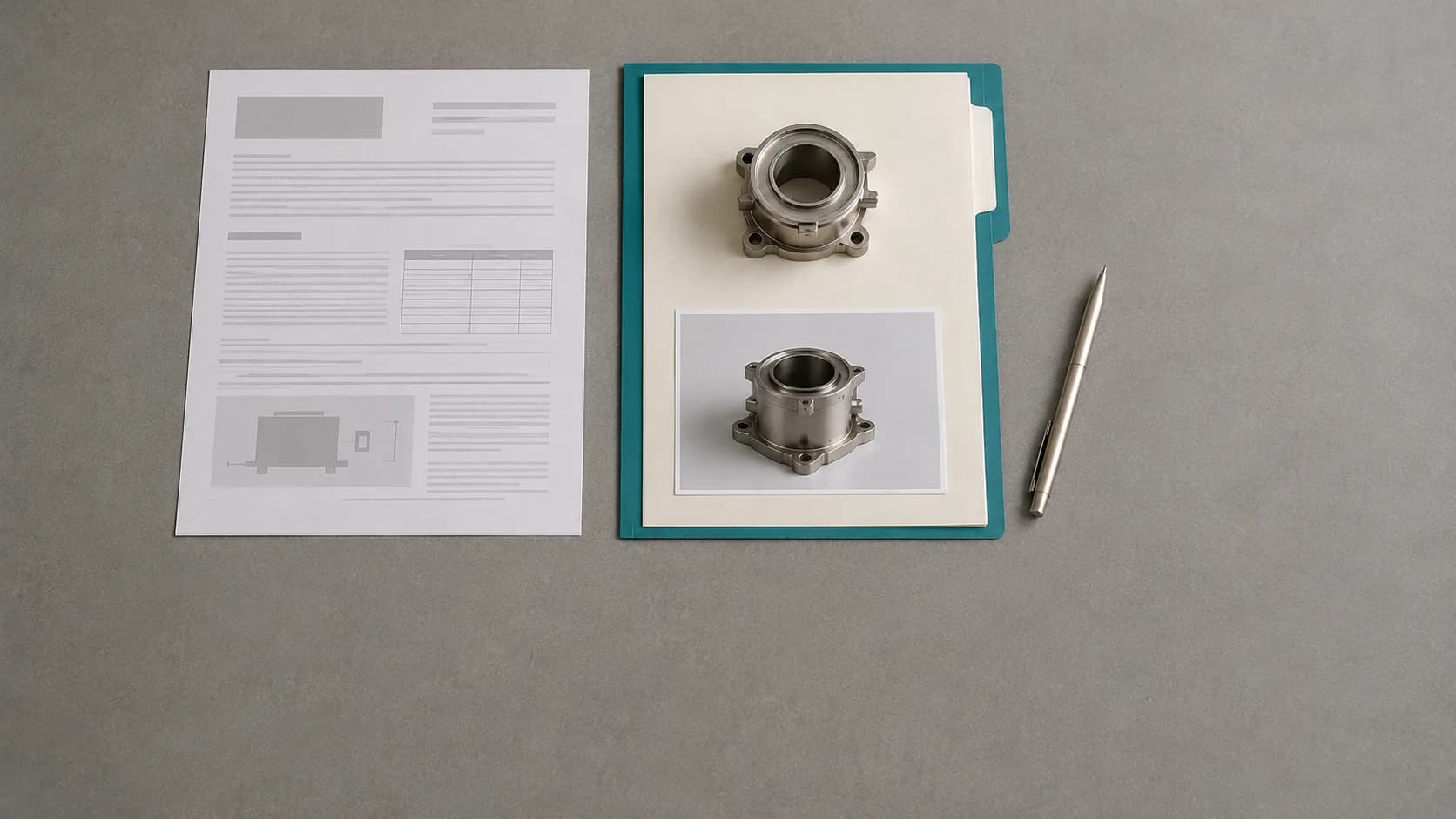
Classification is proved by the product's characteristics, not by its trade name
6. Prevention: three habits that cost little
Check before reusing
A code taken from an earlier declaration is checked, not copied. It is the most profitable gesture in clearance: a few minutes against a reassessment multiplied by the history.
The full method is set out in Checking an existing HS code.
Document the why
Not only the code: the reason for the code. One line per reference — heading retained, note or GRI applied, date, source. That is what separates a good-faith error from an unexplained declaration.
Re-check after every revision
At each revision of the nomenclature, go back over the high-volume, high-rate references. A heading split in two can move a product from one rate to another with no warning at all.
FAQ: classification error and reassessment in Morocco
How far back can customs check my past declarations?
A post-clearance audit covers several past financial years, within the limitation periods set by the Customs and Indirect Taxes Code — and the starting point of that period can differ depending on the nature of the inaccuracy found. That is precisely what makes a repeated error dangerous: it is never one declaration that is reopened, but the series. Have the applicable period confirmed for your situation by your adviser.
My freight forwarder got the code wrong: who is liable?
The customs declarant engages their professional liability, but the importer remains the debtor of the customs debt: you are the one who receives the reassessment notice and you are the one who pays. Recourse against the approved broker is a contractual matter, separate and subsequent. In practice: legal liability is shared, cash flow is not.
Can I spontaneously correct a declaration already liquidated?
It is almost always the right decision where the error is established. A regularisation started on your own initiative, before any notification of a check, is the best demonstration of good faith available — and it stops the risk accumulating on future declarations. The exact terms and consequences are discussed with the customs office, technical file in hand.
Is the amount of the fine negotiable?
The Customs Code provides settlement mechanisms for certain offences. This is not a commercial negotiation: the outcome depends on the qualification retained, the good faith established and the quality of the technical file presented. Hence the importance of documentation built upstream, well before the dispute.
Does a WCO classification opinion on a similar product protect me?
Classification opinions are not binding in the strict sense, but they carry authority and the administration refers to them. A file resting on a classification opinion covering a genuinely comparable product is markedly stronger than one resting on the heading wording alone. The comparability still has to be demonstrated: that is where the discussion is won or lost.
I paid too much duty because of an over-high code. Can I be refunded?
The error runs both ways and an overpayment can be the subject of a refund claim, within the prescribed deadlines and forms. But the administration does not spontaneously detect the errors that favour it: the step is entirely yours, and it means proving the correct classification exactly as in an ordinary dispute.
Articles recommandés

How to check an existing HS code in Morocco (practical guide)
A complete checklist for validating an HS code before you declare it: wording, notes, GRI, taxes, special measures.

Calculating Moroccan customs duties from the HS code
Import duty, the parafiscal levy, cascading VAT: the complete formula for calculating customs duties in Morocco, and why all of it starts with the 10-digit HS code.