Accurate classification is not only a legal obligation, it is a strategic advantage for any authorised economic operator.
In international trade, customs classification is the foundation everything else in your compliance rests on. In Morocco, as in most countries, the Harmonized System (HS) is the absolute reference. Local specifics - the move to a 10-digit code above all - can turn a simple task into a genuine logistics headache.
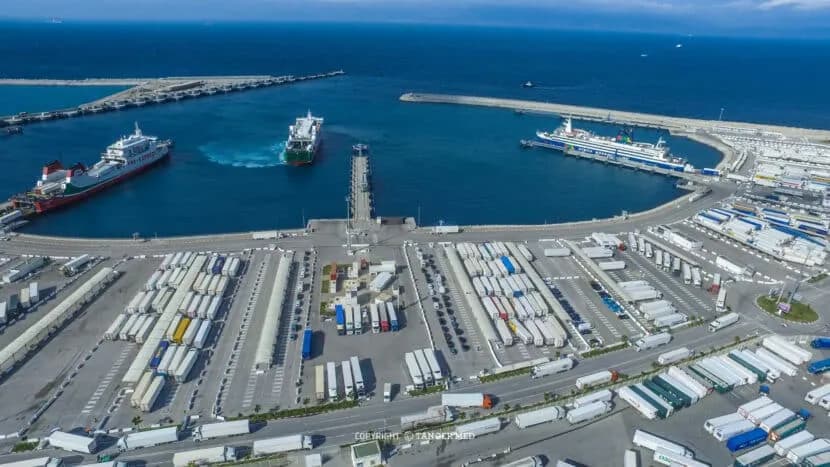
Tanger Med: the pivot of international trade in Morocco
1. What is an HS code?
The Harmonized Commodity Description and Coding System, shortened to HS, is a general-purpose international nomenclature drawn up by the World Customs Organization (WCO). Used by more than 200 countries, it classifies over 98% of the goods traded worldwide under one common structure.
2. Why the General Rules of Interpretation (GRI) matter
Classifying a product is not a matter of searching a list for a keyword. The process is governed by 6 General Rules of Interpretation (GRI), applied in strict order:
GRI 1: the wording rules
Classification is legally determined by the wording of the headings and by the section or chapter notes. If the product matches the wording exactly, the search stops there.
GRI 2, 3 and 4: for the hard cases
When a product is incomplete (GRI 2a), made of different materials (GRI 3b), or appears to fall under several headings, these rules decide the matter. GRI 3c, for example, says that where two headings are equally valid, you take the one that comes last in numerical order.
3. The structure of an HS code in Morocco (10 digits)
In Morocco, the Customs and Indirect Taxes Administration (ADII) uses a 10-digit nomenclature based on the Integrated Tariff:
12 34HS heading (4 digits)
The WCO international standard.
12 34 . 56HS subheading (6 digits)
Used for UN international statistics.
... . 78Combined Nomenclature (8 digits)
Often used for free-trade agreements.
... . 90National code (10 digits)
Specific to Morocco: this is what sets VAT, customs duties and control measures (ONSSA, ANRT, and so on) precisely.
4. Morocco in focus: the Integrated Customs Tariff
The Moroccan customs tariff is more than a price list. It is a complex legal document that brings together:
- Import duties (DI) ranging from 0% to 40% (safeguard measures aside).
- Value Added Tax (VAT), generally 20%, with many exemptions.
- The Domestic Consumption Tax (TIC) on certain products (fuels, tobacco, sugar).
- Trade defence measures (anti-dumping).
Watch out: the legal notes
Legal exclusion
A note can exclude a product from a chapter even when its physical description says it belongs there.
Restrictive definition
Some terms carry a specific meaning "for the purposes of the nomenclature" that differs from ordinary commercial usage.
5. Case study: classifying a smartphone
A mobile phone used to be classified under chapter 85 (Electrical). With the arrival of smartphones, the boundary with computers (8471) blurred.
Articles recommandés
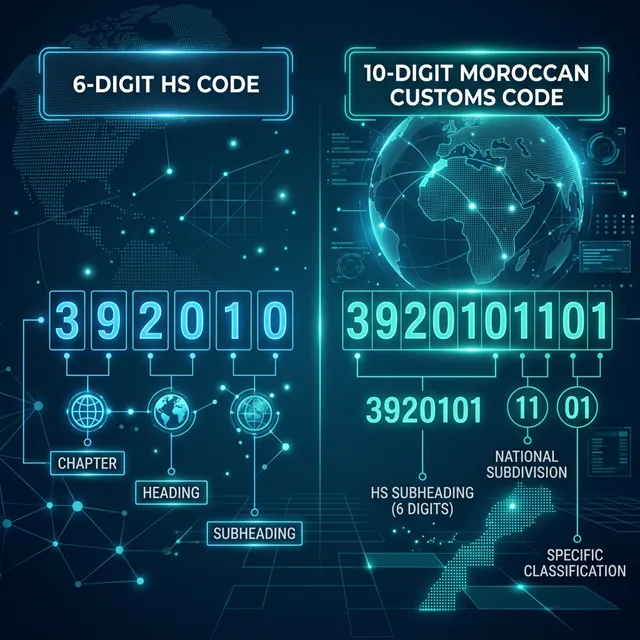
HS code 6 vs 10 digits in Morocco: what is the difference?
Understanding the distinction between the international nomenclature (6 digits) and the Moroccan national tariff (10 digits) to keep your imports safe.
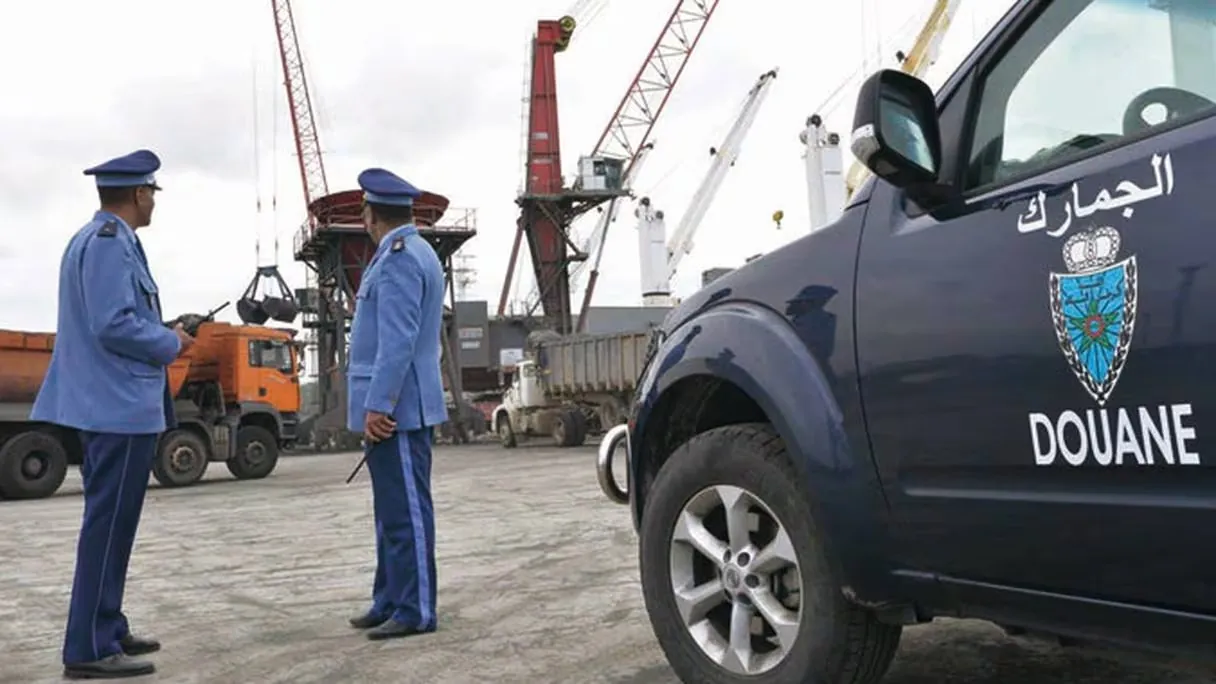
How to find your HS code in Morocco in 2026 (manual method vs AI)
A complete guide: manual search in the Integrated Tariff, AI assistance, when to trust it, and the traps to avoid.

The Moroccan customs nomenclature: 21 sections, 97 chapters
How the Moroccan customs tariff is organised: the 21 sections of the Harmonized System, the chapters, and how to descend all the way to the 10-digit code.