Mistaking the 6-digit HS code for the 10-digit one is like stopping halfway to customs compliance.
In international trade, precision is everything. The Harmonized System (HS) may be universal, but its application changes the moment you cross a national border. In Morocco that nuance shows up as a crucial difference between the 6-digit HS code (international) and the 10-digit code (national). Understanding it is essential if you want to avoid customs hold-ups and tax errors.
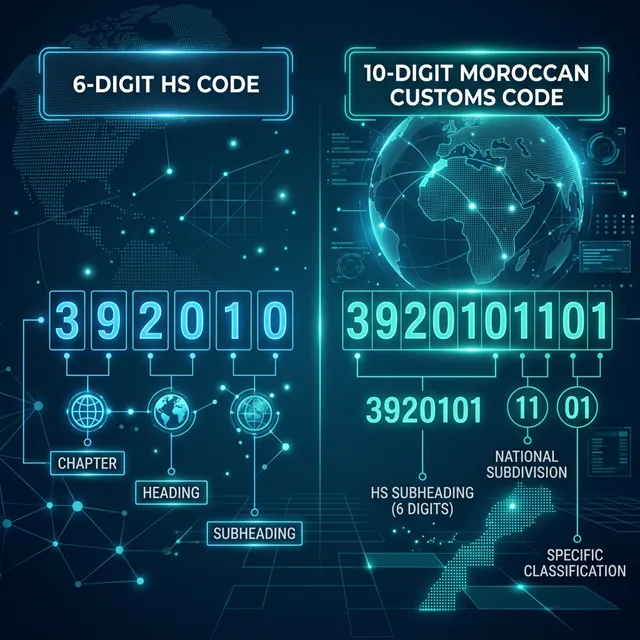
The structure of the customs nomenclature: from international to national
1. The 6-digit code: the universal language (WCO)
The 6-digit code is the common base shared by more than 211 countries and territories in the World Customs Organization (WCO). It is what we call the "HS subheading". This nomenclature is revised every 5 years to reflect technological change (drones, electric vehicles) and environmental concerns.
The advantage of those 6 digits is that exporters can talk to foreign customers with no language barrier: code 8517.13 means "smartphones" anywhere on the planet. But it is a statistical database, not a complete fiscal tool.
2. 8 to 10 digits: fiscal and regulatory sovereignty
The first 6 digits are international; everything after them belongs to the importing country, which uses them to apply its own policies. Two grades of steel can share a 6-digit code while one is taxed more heavily to protect domestic industry.
8 digits (Combined Nomenclature)
Used notably by the European Union (Common Customs Tariff). Digits 7 and 8 serve quota management and foreign-trade statistics finer than the WCO's.
10 digits (the national tariff)
This is the system Morocco has adopted. Digits 7, 8, 9 and 10 make up the "national code". That level of precision is what the automated clearance systems (BADR) need - without all 10 digits, the system cannot compute the customs assessment.
3. Why Moroccan customs require 10 digits
Every subdivision after the 6th digit exists for a precise reason. In Morocco, the Integrated Tariff (10 digits) is what makes it possible to handle:
- The complexity of import duties: Morocco applies rates of 0%, 2.5%, 10%, 17.5%, 25%, 30% and up to 40%. The difference between 25% and 40% often comes down to the last two digits.
- The Domestic Consumption Tax (TIC): applied to luxury goods, alcohol, tobacco and certain sugared products. Only the 10-digit code triggers it.
- Trade defence measures: anti-dumping duties or safeguards. These are usually targeted at very specific products identified by their national code.
- Safety and health standards: a 10-digit code can flag to the system that ONSSA (animal/plant health) or the MCI (industry/standards) must inspect the goods before release.
4. What an imprecise declaration risks
The impact on your supply chain
The classic mistake is copying the 6-digit HS code supplied by an Asian or European vendor straight into the DUM (Single Goods Declaration).
Customs fines
A misclassification that results in under-collected duty counts as a "false declaration". It carries fines that can reach several times the duty avoided.
Storage charges
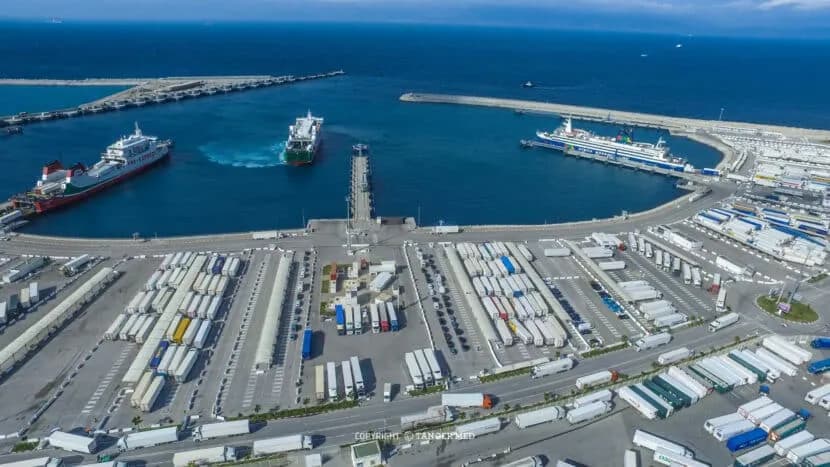
If the 10-digit code requires an authorisation you have not prepared (an import licence, say), your container sits at Tanger Med accruing daily demurrage.
5. Example: the subtlety of electronic components
Take the import of monitors. The international code (6 digits) might be 8528.52. In Morocco, everything then turns on the intended use:
| National wording | 10-digit code | Import duty |
|---|---|---|
| Computer monitor | 8528.52.10.00 | 2.5% |
| Other monitors (TV / professional) | 8528.52.90.00 | 40% |
An error in the last two digits of the national code multiplies your customs duty by 16. This is where expertise - or AI - becomes financial protection.

The financial impact of going from 6 to 10 digits
HS code 6
Duty: 10%
Possible 10-digit code A
Duty: 5%
Possible 10-digit code B
Duty: 15%
On a $1,000 invoice, a classification error moves the duty between $50 and $150 - penalties not included.
Our advice for flawless classification
- Ask for the technical sheet: the 6-digit code is not enough. ADII needs the composition, the use and the dimensions.
- Read the section notes: before trusting the wording, check the notes that may specifically exclude your product.
- Binding Tariff Information (RTC): where real doubt remains, you can ask the administration for an official ruling.
- Use AI tools: customs nomenclatures run to thousands of pages. An AI trained on the Moroccan Integrated Tariff can find the 10 digits in seconds.
Articles recommandés
The complete guide to HS codes in Morocco (Customs 2026, 6 and 10 digits)
Everything you need to know about HS code structure in Morocco, the 10-digit specifics, and how to avoid classification mistakes.

Calculating Moroccan customs duties from the HS code
Import duty, the parafiscal levy, cascading VAT: the complete formula for calculating customs duties in Morocco, and why all of it starts with the 10-digit HS code.